
Gene Editing in Cell-Based Therapies: CRISPR Applications in Regenerative Medicine
Gene Editing in Cell-Based Therapies: CRISPR Applications in Regenerative Medicine
Introduction
The convergence of gene editing and regenerative medicine has opened new frontiers in healthcare, enabling scientists to correct genetic defects, enhance cellular function, and develop personalized therapies. Among the tools available, CRISPR-Cas9 has emerged as the most powerful and versatile, allowing precise, efficient, and cost-effective modification of cellular DNA. When combined with cell-based therapies, CRISPR offers the potential to treat previously untreatable genetic disorders, engineer immune cells for cancer therapy, and improve the safety and efficacy of stem cell treatments. This intersection of gene editing and regenerative medicine is reshaping the landscape of biomedical research and clinical innovation.
CRISPR-Cas9: The Game-Changer in Gene Editing
CRISPR-Cas9 works like a molecular pair of scissors guided by a programmable RNA sequence, targeting specific regions of the genome for editing. Its precision and adaptability have revolutionized genetic research, enabling scientists to knock out harmful genes, insert therapeutic sequences, or correct mutations with unprecedented efficiency. Unlike earlier gene-editing technologies, CRISPR is faster, more affordable, and easier to customize, making it ideal for applications in cell-based therapies. Importantly, CRISPR can be applied to a wide variety of cell types, including stem cells, T-cells, and induced pluripotent stem cells (iPSCs), expanding the range of potential regenerative medicine applications.

Enhancing Stem Cell Therapies with CRISPR
Stem cells are a cornerstone of regenerative medicine due to their ability to self-renew and differentiate into specialized tissues. CRISPR enhances these therapies by allowing genetic modifications that improve functionality, safety, and therapeutic potential. For example, scientists can edit stem cells to resist immune rejection, increase their regenerative capacity, or repair disease-causing mutations. In cardiovascular, musculoskeletal, and neurodegenerative disorders, CRISPR-modified stem cells are being explored to replace damaged tissues and restore function. By combining precise gene editing with stem cell biology, researchers can generate more effective and personalized regenerative treatments.

Figure: CRISPER/Cas9-based approaches to reduce the immunogenicity of MSCs
CRISPR in Immune Cell Therapy
Beyond stem cells, CRISPR is transforming immune cell-based therapies, particularly in oncology. T-cells can be genetically engineered to target cancer cells more effectively or to reduce the risk of graft-versus-host disease in transplantation. Techniques like CAR-T cell therapy are increasingly enhanced with CRISPR to create safer and more potent treatments. By editing immune cells, scientists can improve their targeting accuracy, persistence in the body, and overall therapeutic performance, providing hope for patients with previously intractable cancers.
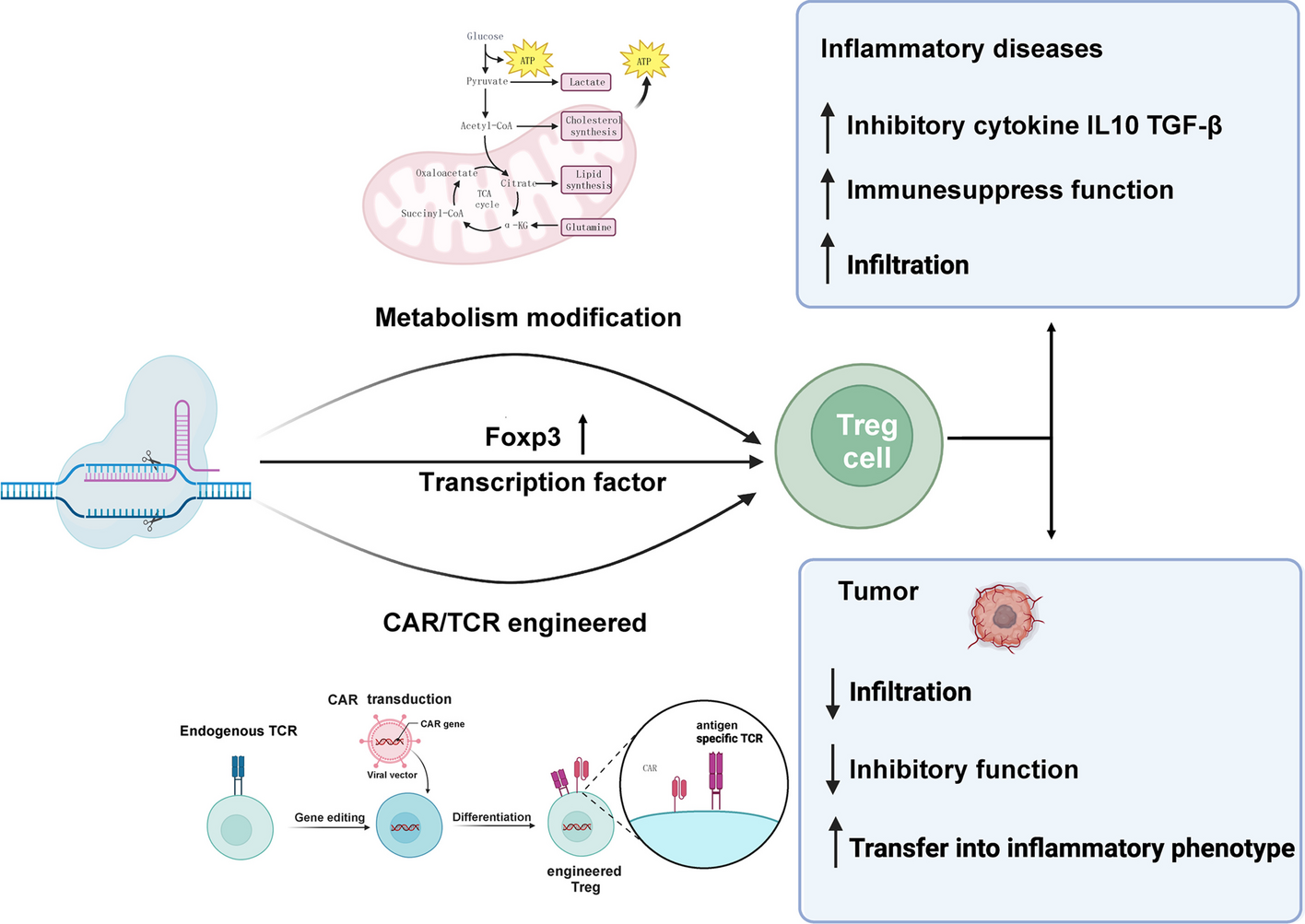
Figure : CRISPR–Cas9 editing of the transcription factor Foxp3, along with the modulation of metabolism regulators and the engineering of TCR and CAR in Treg cells, can enable these cells to play distinct roles in autoimmune diseases and tumor environments
Challenges and Considerations
While CRISPR offers enormous potential, its application in cell-based therapies is not without challenges. Off-target effects, where unintended regions of the genome are edited, remain a significant concern. Researchers are developing advanced guide RNA designs, high-fidelity Cas variants, and comprehensive screening methods to minimize these risks. Additionally, regulatory approval for CRISPR-edited cell therapies requires rigorous safety testing, ethical oversight, and GMP-compliant manufacturing, which can slow translation from lab to clinic. Despite these hurdles, ongoing innovations are steadily improving both the precision and safety of gene-edited cell therapies.

Future Perspectives
The future of regenerative medicine is closely linked to the evolution of CRISPR technologies. Emerging approaches such as base editing, prime editing, and epigenetic editing offer even more refined tools for gene modification without introducing double-strand breaks. Coupled with advancements in stem cell culture, organoid systems, and tissue engineering, CRISPR promises to unlock personalized and curative therapies for a wide range of genetic and degenerative diseases. As gene editing becomes safer and more accessible, the integration of CRISPR in regenerative medicine will continue to expand, reshaping the possibilities for patient care and scientific discovery.
Conclusion
CRISPR-Cas9 has revolutionized the field of gene editing and is now pioneering new possibilities in cell-based therapies. By enhancing the safety, functionality, and therapeutic potential of stem cells and immune cells, CRISPR is driving advances in regenerative medicine, oncology, and personalized treatments. While challenges remain, ongoing innovation and careful regulatory oversight are steadily overcoming barriers, positioning gene-edited cell therapies as one of the most promising frontiers in modern medicine.
Recent Posts
-

HPLC Chromatography: Principle, Types, and Applications
HPLC Chromatography: Principle, Types, and Applications Introduction to HPLC Chromatography HPLC Chr …8th Apr 2026 -
Advances in Peptide Synthesis Technologies and Their Applications in Modern Biotechnology
Advances in Peptide Synthesis Technologies and Their Applications in Modern Biotechnology …27th Mar 2026 -
Western Blot
Introduction Western blotting is a fundamental analytical technique widely used in molecular biology …27th Mar 2026