
Results of a UK NEQAS proficiency testing exercise
Specialized Research Reagents: Applications in Biomedical Research, Clinical Diagnostics and Chemical Synthesis
Introduction
Research reagents are essential components of modern scientific investigation, providing the chemical, biological, and analytical tools required to study complex molecular processes and perform specialized laboratory experiments. From clinical coagulation testing and immunohistochemical analysis to plant biochemistry and advanced organic synthesis, specialized reagents contribute to the development of reliable analytical methods, accurate detection systems, and innovative chemical transformations.
The selection of appropriate reagents is particularly important in experimental research because their chemical composition, biological specificity, purity, and compatibility with analytical techniques can directly influence experimental outcomes. Whether used for measuring coagulation factors, identifying viral proteins in tissues, preparing glycoconjugate compounds, evaluating thromboplastin sensitivity, or constructing stereochemically defined organic molecules, reagents must meet the specific requirements of each application.
Different research disciplines require different types of specialized reagents. Clinical laboratories depend on validated coagulation and immunological reagents to obtain reliable diagnostic measurements. Histopathology laboratories require highly specific antibodies for detecting proteins within tissue sections. Plant biochemistry relies on specialized glycoconjugate reagents for studying molecular interactions, while organic chemistry uses carefully designed synthetic reagents to control reaction efficiency and stereoselectivity.
Understanding the properties, mechanisms, and applications of these reagents is therefore essential for researchers working across biomedical sciences, biotechnology, molecular biology, analytical chemistry, and pharmaceutical research.
1. Specialized Reagents for Coagulation Testing and Haemophilia Research
Coagulation reagents play a fundamental role in laboratory investigations of haemostatic disorders, monitoring anticoagulant therapies, and evaluating the activity of specific coagulation factors. Their analytical performance depends on the interaction between reagent components and the biological pathways involved in blood coagulation.
Two important research areas illustrate the importance of reagent selection: the effects of emicizumab on coagulation assays and the evaluation of thromboplastin reagents with an International Sensitivity Index close to 1.
1.1. Effects of Emicizumab on APTT, FVIII Assays and FVIII Inhibitor Assays

Emicizumab (Hemlibra, Roche, Switzerland) is a humanized, bispecific, modified monoclonal immunoglobulin G4 (IgG4) antibody developed for the treatment of haemophilia A. It binds human coagulation factor IX (FIX), activated factor IX (FIXa), and factor X (FX), functionally reproducing an important cofactor activity of activated factor VIII (FVIIIa).
Under normal physiological conditions, activated factor VIII participates in the intrinsic coagulation pathway by facilitating the interaction between FIXa and FX. This interaction promotes FX activation, contributing to thrombin generation and subsequent fibrin formation.
In patients with severe haemophilia A, insufficient FVIII activity compromises this process and increases the risk of bleeding. Emicizumab provides an alternative mechanism by bringing FIXa and FX into close proximity, supporting coagulation through a mechanism that mimics FVIIIa activity.
However, its mechanism of action creates important analytical challenges for laboratory coagulation testing. The presence of emicizumab can interfere with conventional activated partial thromboplastin time (APTT), FVIII activity measurements, and FVIII inhibitor assays.
Study objective and experimental design
A UK NEQAS proficiency testing exercise investigated the effects of emicizumab on APTT screening, surrogate FVIII activity measurements, and FVIII inhibitor results using different commercially available reagents.
Two plasma samples were distributed to participating laboratories. The first was obtained from a patient with severe haemophilia A, FVIII inhibitors, and ongoing emicizumab treatment. The second was prepared in vitro by adding emicizumab to plasma obtained from a patient with severe haemophilia A without FVIII inhibitors.
Participating laboratories performed APTT screening, surrogate FVIII activity measurements, and FVIII inhibitor testing on both samples.
APTT and FVIII assay interference
The results demonstrated consistent APTT shortening, with measurements falling below the lower limit of the normal reference range.
This effect is associated with the ability of emicizumab to promote the interaction between FIXa and FX, accelerating coagulation reactions measured through the intrinsic pathway.
Chromogenic FVIII assays using the Hyphen/Biophen human component-based system demonstrated higher-than-expected coefficients of variation, ranging from 38% to 40%.
The modified one-stage FVIII assay incorporating emicizumab-specific calibrators produced similar results regardless of the APTT reagent employed.
For the FVIII inhibitor investigation, sample S18:23 produced a median result of 1.43 Bethesda units (BU), with a range of 0.9–3.0 BU/mL and a coefficient of variation of 38%. Sample S18:24 was classified as below the lower limit of detection.
Analytical significance
These findings demonstrate that conventional APTT-based assays are unsuitable for reliably measuring coagulation factor activity or FVIII inhibitors in patients treated with emicizumab.
Chromogenic assays using bovine-derived coagulation components are insensitive to emicizumab and should be used to monitor endogenous FVIII activity and FVIII inhibitors in treated patients.
The implementation of product-specific calibrators is also important for reducing variability and improving the consistency of analytical results.
This investigation highlights the importance of selecting appropriate coagulation reagents according to their biological composition and susceptibility to therapeutic antibody interference.
1.2. Evaluation of STA-NeoPTimal: An Extraction Thromboplastin Reagent with an ISI Close to 1
The prothrombin time (PT) is one of the most frequently requested laboratory investigations for assessing congenital and acquired coagulation disorders and monitoring patients receiving oral anticoagulant therapy.
PT evaluates the extrinsic and common coagulation pathways by measuring the time required for plasma to form a fibrin clot following activation with a thromboplastin reagent and calcium.
Thromboplastin reagents can demonstrate significantly different sensitivities to coagulation abnormalities, particularly those associated with vitamin K antagonist (VKA) treatment.
To account for these differences, thromboplastins are characterized using the International Sensitivity Index (ISI), which is incorporated into the calculation of the International Normalized Ratio (INR).
The use of a thromboplastin with an ISI close to 1 is particularly interesting because it can simplify the relationship between PT ratio and INR reporting.
Objective of the investigation
The study evaluated two candidate thromboplastin reagents with ISI values close to 1 and compared their analytical performance with a reference reagent routinely used in the laboratory.
Three thromboplastins were investigated:
-
STA-Neoplastine CI Plus: rabbit brain-extracted thromboplastin, ISI = 1.26.
-
STA-NeoPTimal: rabbit brain-extracted thromboplastin, ISI = 1.01.
-
STA-Neoplastine R: recombinant thromboplastin, ISI = 0.97.
A total of 175 plasma samples were analyzed, including 75 samples from individuals without coagulation defects and 100 samples from patients receiving VKA therapy.
Results and comparative performance
Both STA-NeoPTimal and STA-Neoplastine R demonstrated good correlation with the reference reagent STA-Neoplastine CI Plus.
For STA-NeoPTimal, the regression equation was:
y=1.186x-0.135
with a coefficient of determination of:
r^2=0.9454
For STA-Neoplastine R, the regression equation was:
y=1.1432x-0.1554
with:
r^2=0.9951
The lowest INR bias was obtained using STA-NeoPTimal, with a reported interval ranging from -0.7 to +0.4.
These results demonstrated that both candidate thromboplastins correlated well with the reference reagent, while STA-NeoPTimal provided the lowest INR bias in the investigated comparison.
Importance for coagulation laboratories
STA-NeoPTimal offers an ISI value of 1.01, which is particularly close to the international reference value.
This characteristic can simplify the interpretation and reporting of PT results because the PT ratio becomes numerically close to the INR.
The study concluded that STA-NeoPTimal could be used in the laboratory because it produced results comparable to those obtained with the established reference reagent.
This investigation emphasizes the importance of thromboplastin sensitivity, reagent composition, and appropriate analytical standardization in routine coagulation testing.
2. Immunohistochemical Reagents for In Situ Protein Expression Analysis of Coronavirus-Associated Changes in Human Tissues
Immunohistochemistry (IHC) is a widely used analytical technique in pathology and biomedical research for detecting specific proteins within biological tissue sections.
The technique relies on antigen-antibody interactions to visualize the distribution and localization of proteins while preserving the structural organization of tissues.
During investigations of severe acute respiratory syndrome coronavirus 2 (SARS-CoV-2), immunohistochemical methods became particularly important for studying viral protein expression in different human organs.
However, reliable immunohistochemical analysis requires antibodies with high specificity and suitable performance under tissue staining conditions.
An antibody that demonstrates satisfactory recognition in one experimental application may not necessarily provide reliable results in formalin-fixed tissue specimens. Therefore, rigorous reagent validation is essential before antibodies are used for in situ viral protein detection.
2.1. Evaluation of Commercial Monoclonal Antibodies
The investigation examined the suitability of seven commercially available monoclonal antibodies for immunohistochemical detection of SARS-CoV-2.
The tested antibodies included:
-
mAb 001 – Sino Biological, 40143-R001.
-
mAb 007 – Sino Biological, 40150-R007.
-
mAb 019 – Sino Biological, 40143-R019.
-
mAb 1A9 – GeneTex, GTX632604.
-
mAb ABM19C9 – Abeomics, 10-10007.
-
FIPV3-70 – Santa Cruz, SC-65653.
-
mAb 6F10 – BioVision, A2060.
The antibodies were initially screened using HEK293 cells transfected with different SARS-CoV-2 proteins, including viral nucleoprotein, the S1 subunit of spike protein, and the S2 subunit of spike protein.
Untransfected HEK293 cells were included as negative controls to evaluate potential nonspecific antibody binding.
A panel of normal human tissues was also examined to determine whether the antibodies produced unintended staining in non-infected tissue structures.
Finally, lung tissue containing SARS-CoV-2, previously confirmed through in situ hybridization (ISH), was used to evaluate antibody performance in actual tissue specimens.
2.2. Identification of Specific Antibody Clones
Among the seven antibodies examined, only two demonstrated specific immunoreactivity suitable for the investigated applications.
These were:
-
Clone 001, directed against SARS-CoV-2 nucleoprotein.
-
Clone 1A9, directed against the S2 subunit of spike protein.
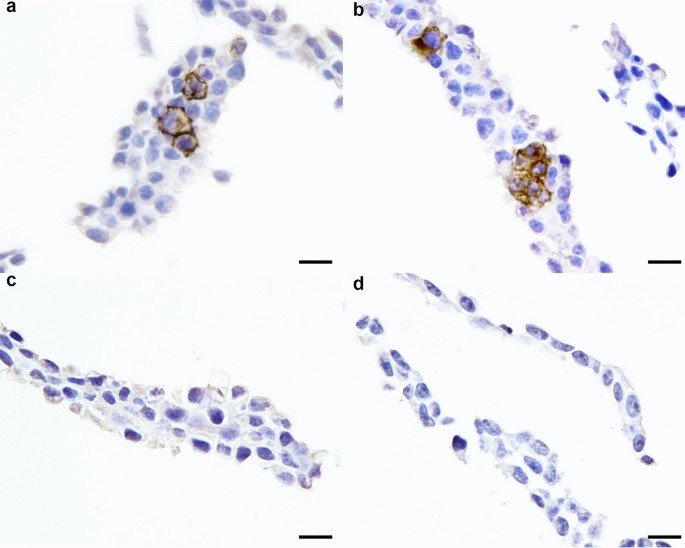
Both antibodies demonstrated strong staining during the acute phase of COVID-19 pneumonia, particularly in regions displaying acute diffuse alveolar damage.
However, their staining patterns were not completely congruent, suggesting differences in the tissue distribution and detectability of the respective viral protein targets.
The nucleoprotein is a structural viral protein associated with the SARS-CoV-2 RNA genome, while the spike protein participates in viral attachment and entry into host cells.
The spike protein contains two major functional subunits:
-
S1, which contains the receptor-binding domain involved in host-cell recognition.
-
S2, which contributes to membrane fusion and viral entry.
The ability to detect these different viral components provides complementary information for investigating SARS-CoV-2 distribution in biological tissues.
2.3. Viral Protein Distribution in Different Tissues
In addition to pulmonary findings, viral protein was identified in kidney tubules and endothelial structures in multiple organs.
The study also reported viral protein detection in a nasal swab obtained from a patient with persistent SARS-CoV-2 infection.
These observations demonstrate the potential application of validated immunohistochemical reagents for investigating viral protein distribution beyond the respiratory system.
The other tested antibodies either demonstrated insufficient reactivity or produced nonspecific staining in tissues and lesions without confirmed SARS-CoV-2 infection.
These findings highlight the importance of validating monoclonal antibodies under the exact experimental conditions in which they will be used.
2.4. Importance of Immunohistochemical Reagent Specificity
Reliable antibody selection is essential for accurate immunohistochemical interpretation.
Several factors can influence antibody performance, including antigen accessibility, tissue fixation, sample preparation, epitope preservation, antibody concentration, and detection conditions.
Nonspecific staining can produce misleading results and interfere with the interpretation of tissue pathology.
The use of transfected cellular models, untransfected controls, normal tissue panels, and independently confirmed infected specimens provides a systematic strategy for evaluating antibody specificity.
The study established that clone 001 against nucleoprotein and clone 1A9 against the S2 spike subunit were useful for the in situ detection of SARS-CoV-2 under the investigated conditions.
These results reinforce the importance of selecting validated immunohistochemical reagents for infectious disease research and tissue-based protein expression analysis.
3. Yariv Reagents: Synthesis, Purification and Applications in Plant Biology
Yariv reagents are specialized glycoconjugate tris-azo dyes widely used in plant biology and biochemical research.
They are particularly relevant to investigations involving plant-derived glycoproteins, carbohydrate-associated molecules, and molecular interactions within plant tissues.
These compounds are synthesized through diazo coupling between phloroglucinol and a para-diazophenyl glycoside.
The resulting molecular structures contain multiple azo bonds that connect aromatic components with carbohydrate-containing groups.
Despite their synthetic accessibility, obtaining highly purified Yariv reagents with complete structural characterization has presented methodological challenges.
The development of reliable synthesis and purification procedures is therefore important for ensuring the consistency and quality of these specialized biochemical reagents.
3.1. Chemical Principles of Yariv Reagent Synthesis
The preparation of Yariv reagents relies on diazo coupling chemistry.
The reaction involves a diazonium-containing aromatic compound, derived from a para-diazophenyl glycoside, and phloroglucinol, an aromatic compound containing three hydroxyl groups.
The coupling reaction generates azo linkages characterized by nitrogen-nitrogen double bonds connecting aromatic structures.
The formation of three azo linkages produces the characteristic tris-azo architecture of Yariv reagents.
The carbohydrate component contributes specific chemical properties to the resulting glycoconjugate and is relevant to its biological applications.
Because the final product contains several functional groups and a relatively complex molecular arrangement, appropriate reaction conditions and purification strategies are required to obtain a well-defined compound.
3.2. Importance of Purification and Characterization
Purification is a critical stage in the preparation of Yariv reagents because crude reaction mixtures may contain unreacted starting materials, incomplete coupling products, and other chemical impurities.
These unwanted components can affect product composition and potentially interfere with downstream biochemical investigations.
An effective purification procedure aims to isolate the desired glycoconjugate while preserving its chemical structure.
Complete analytical characterization is equally important because it provides information about the molecular identity and properties of the synthesized compound.
Depending on the analytical requirements, spectroscopic and mass-based techniques can be used to investigate the chemical characteristics of the purified products.
For example, UV-visible spectroscopy can provide information about the absorption properties of the azo chromophore, while nuclear magnetic resonance and mass spectrometry can provide complementary structural information.
3.3. Improved Protocols for Six Yariv Reagents
The study reports optimized procedures for the synthesis, purification, and characterization of a panel of six different Yariv reagents.
The investigation addresses the lack of well-defined procedures for obtaining pure Yariv compounds with comprehensive characterization data.
The proposed protocols provide a methodological foundation for preparing these glycoconjugates more consistently.
Furthermore, the approaches described may be valuable for developing purification and analytical characterization strategies for other glycoconjugates.
3.4. Applications in Plant Biochemistry
Yariv reagents are particularly important in research involving arabinogalactan proteins (AGPs), a family of complex plant glycoproteins.

AGPs are present in plant cell walls and at cell surfaces, where they participate in processes associated with plant development, cellular organization, and molecular recognition.
Certain Yariv reagents are used as research tools for investigating these carbohydrate-rich glycoproteins and their biological interactions.
Their applications include studies of plant cell-wall components, glycoprotein characterization, cellular differentiation, and plant tissue development.
The availability of well-characterized Yariv reagents is therefore important for obtaining reproducible results in plant molecular biology and glycoconjugate research.
4. α,α-Disubstituted Crotylboronate Reagents for Stereoselective Organic Synthesis
The development of specialized chemical reagents has an important role in modern organic synthesis, particularly in reactions requiring precise control over molecular structure and stereochemistry.
Crotylboronate reagents are organoboron compounds used in stereoselective carbon-carbon bond-forming reactions.
They are particularly valuable in crotylation reactions, in which crotyl-derived molecular fragments are added to aldehydes to generate homoallylic alcohol products.
These transformations provide access to versatile organic intermediates containing both alcohol and alkene functionalities.
The development of α,α-disubstituted crotylboronate reagents introduces additional possibilities for controlling the stereochemical arrangement of the resulting molecules.
The investigated study explores the influence of chiral Brønsted acid and Lewis acid catalysis on crotylation reactions using E- and Z-crotylboron reagents.
4.1. Chiral Brønsted Acid-Catalyzed Asymmetric Crotylation
Brønsted acids are proton-donating compounds that can activate substrates through proton transfer and associated molecular interactions.
When a chiral Brønsted acid is used, the reaction takes place within an asymmetric molecular environment that can favor the formation of one stereoisomer over another.
The developed E-crotylboron reagent underwent chiral Brønsted acid-catalyzed asymmetric aldehyde addition, producing (E)-anti-1,2-oxaborinan-3-enes with excellent enantioselectivity and E-selectivity.
This result demonstrates the ability of the catalytic system to control both stereochemical configuration and alkene geometry.
Enantioselectivity describes the preferential formation of one enantiomer, whereas E-selectivity refers to preferential formation of the E geometric configuration.
The resulting products represent valuable intermediates for further synthetic transformations.
4.2. Lewis Acid-Catalyzed Crotylation Using BF₃·OEt₂

The use of boron trifluoride diethyl etherate (BF₃·OEt₂) as a Lewis acid catalyst produced a different stereochemical outcome.
Lewis acids accept electron pairs and can modify the reactivity of substrates through coordination interactions.
In the investigated reaction, BF₃·OEt₂ catalysis reversed the stereoselectivity obtained under chiral Brønsted acid conditions.
The same E-crotylboron reagent produced (Z)-δ-boryl-anti-homoallylic alcohols with excellent Z-selectivity.
This result demonstrates that the choice of catalyst can significantly influence the stereochemical outcome of crotylation reactions, even when the starting crotylboronate geometry remains unchanged.
4.3. Reactions with Z-Crotylboronate Reagents
The study also examined the behavior of Z-crotylboron reagents under BF₃·OEt₂ catalysis.
The Z-configured reagent produced (Z)-δ-boryl-syn-homoallylic alcohols with good Z-selectivity.
The comparison between E- and Z-crotylboron reagents illustrates the importance of starting material geometry in determining the relative configuration of the final product.
Together, these reactions demonstrate how both reagent structure and catalytic conditions can be used to control stereochemical relationships during carbon-carbon bond formation.
4.4. DFT Calculations and Mechanistic Investigations
Density functional theory (DFT) calculations were performed to investigate the origins of the observed enantioselectivity and stereoselectivity.
DFT is a computational chemistry method used to examine molecular electronic structures, reaction pathways, and the relative energies of different transition states and intermediates.
The calculations helped establish the origins of the stereochemical outcomes observed during chiral Brønsted acid-catalyzed asymmetric allylation.
The researchers also proposed stereochemical models for BF₃·OEt₂-catalyzed transformations to explain the observed Z-selective allyl additions.
These computational investigations provide additional insight into the relationship between catalyst structure, molecular interactions, and stereochemical control.
4.5. Applications in the Synthesis of Complex Organic Molecules
The reactions generate valuable homoallylic alcohol products containing stereodefined trisubstituted alkene units.
These structural features make the products useful intermediates for preparing more complex organic molecules.
The synthetic utility of the developed reagents was further demonstrated through the total synthesis of salinipyrones A and B.
Total synthesis involves constructing complex natural products through a sequence of controlled chemical transformations.
The successful application of crotylboronate reagents in these syntheses demonstrates their value beyond model reactions and highlights their potential in advanced organic chemistry and natural product preparation.
5. The Importance of Reagent Selection, Analytical Performance and Quality Control
Across clinical diagnostics, immunohistochemistry, plant biochemistry, and organic synthesis, the performance of specialized reagents depends on several common principles.
Although the chemical mechanisms may differ considerably between applications, reagent selection remains essential for achieving reliable and reproducible results.
Specificity and Selectivity: Coagulation reagents, antibodies, and chemical building blocks must interact with their intended targets while minimizing unwanted reactions or interference.
Purity and Composition: The presence of contaminants or unwanted chemical components may influence analytical performance and reaction efficiency.
Compatibility: Reagents must be compatible with the selected analytical method, biological sample, reaction environment, and instrumentation.
Calibration and Validation: Appropriate reference materials, controls, and calibration systems are necessary for evaluating analytical accuracy and reproducibility.
Reaction Conditions: Temperature, pH, solvent composition, incubation time, and other experimental parameters can influence reagent behavior.
Quality Assurance: Appropriate quality control procedures and technical documentation help ensure that reagents are suitable for their intended research applications.
The studies discussed in this page illustrate how carefully selected and validated reagents contribute to the development of reliable laboratory methods, more precise analytical measurements, and advanced synthetic procedures.
6. Applications Across Biomedical and Chemical Research
Specialized reagents support a broad range of scientific disciplines and laboratory applications.
-
Clinical Haematology: Coagulation reagents are essential for evaluating PT, APTT, FVIII activity, FVIII inhibitors, and anticoagulant therapy.
-
Immunohistochemistry: Monoclonal antibodies support the in situ detection and localization of specific proteins in biological tissues.
-
Plant Biology: Yariv reagents provide specialized tools for investigating glycoconjugates and plant glycoproteins.
-
Biochemical Research: Characterized reagents enable investigations of molecular interactions, protein function, and biological pathways.
-
Organic Synthesis: Crotylboronate reagents facilitate stereoselective carbon-carbon bond formation and the preparation of complex organic molecules.
-
Pharmaceutical Research: Specialized analytical and synthetic reagents support drug discovery, molecular characterization, and the development of biologically active compounds.
-
Analytical Chemistry: Reagent quality and appropriate calibration contribute to reliable measurements and reproducible experimental outcomes.
Conclusion
Specialized reagents are indispensable tools across modern biomedical research, clinical laboratory diagnostics, plant biochemistry, and advanced chemical synthesis.
From emicizumab-sensitive coagulation assays and thromboplastin reagent evaluation to monoclonal antibody validation, Yariv reagent purification, and stereoselective crotylboronate chemistry, these applications demonstrate the importance of understanding reagent composition, biological specificity, reaction mechanisms, and analytical performance.
The selection of appropriate reagents is essential for obtaining reliable laboratory measurements, identifying molecular targets, investigating biological interactions, and performing controlled chemical transformations.
As biotechnology and analytical chemistry continue to evolve, the availability of specialized and well-characterized reagents remains fundamental to supporting innovative research and improving experimental reproducibility.
Explore specialized research reagents and laboratory solutions designed to support clinical diagnostics, immunohistochemistry, biochemical investigations, plant science, and advanced organic synthesis.