
Reactive Oxygen Assays
Reactive Oxygen Assays – Chemiluminescent Assays
Advanced Chemiluminescence-Based Methods for Reactive Oxygen Detection
Reactive Oxygen Assays – Chemiluminescent Assays are essential analytical tools for investigating reactive oxygen species (ROS), oxidative activity, and redox-related mechanisms in biological systems. These assays use light-emitting chemical reactions to detect and monitor oxidative processes, providing researchers with valuable information about cellular metabolism, oxidative stress, and biochemical interactions.
Reactive oxygen species are naturally generated during several cellular processes, particularly mitochondrial respiration, enzymatic reactions, and immune system activation. At controlled concentrations, ROS participate in important physiological functions, including intracellular signaling, gene expression regulation, cellular adaptation, and host defense mechanisms. However, excessive ROS production or insufficient antioxidant protection can disturb cellular redox balance, leading to oxidative stress and potential damage to essential biological molecules such as proteins, lipids, and nucleic acids.
Understanding ROS generation and regulation is therefore fundamental to research in molecular biology, neuroscience, immunology, pharmacology, toxicology, and cellular physiology. Chemiluminescent assays provide an analytical approach for studying these mechanisms through the detection of light generated during specific oxidation reactions.
Understanding the Principle of Chemiluminescent ROS Assays
Chemiluminescence is a phenomenon in which a chemical reaction produces light as one of its reaction products. Unlike fluorescence, which requires an external excitation light source, chemiluminescence generates photons directly through a chemical process.
In reactive oxygen detection, chemiluminescent reagents interact with specific reactive species or participate in oxidation reactions that produce measurable light signals. The intensity of the emitted light can be monitored over time and used to investigate oxidative activity within an experimental sample.
Several chemiluminescent compounds are employed in oxidative stress research. Luminol is commonly used in hydrogen peroxide- and peroxidase-dependent reactions, while lucigenin-based systems have been used to investigate superoxide-related activity. The selection of a suitable reagent depends on the target species, sample characteristics, assay conditions, and experimental objectives.
The resulting luminescence is generally measured using a luminometer or a microplate reader equipped with a luminescence detection system. Depending on the assay design, researchers can evaluate signal intensity, reaction kinetics, and changes in oxidative activity under different experimental conditions.

Reactive Oxygen Species and Their Role in Cellular Research
Reactive oxygen species comprise a group of chemically reactive oxygen-containing molecules and radicals. They are involved in numerous biological processes and are important research targets in studies examining cellular function and oxidative balance.
Some of the most commonly investigated ROS include:
Superoxide Anion (O₂•⁻): Generated through several enzymatic and mitochondrial processes, superoxide is an important precursor of other reactive oxygen species. Its production is frequently investigated in studies of mitochondrial activity, immune responses, and oxidative stress.
Hydrogen Peroxide (H₂O₂): Although not a free radical, hydrogen peroxide is an important ROS involved in cellular signaling, redox regulation, and oxidative reactions. Its concentration and metabolism are closely associated with antioxidant defense mechanisms.
Hydroxyl Radical (•OH): Highly reactive and short-lived, hydroxyl radicals can interact with various cellular components, including membrane lipids, proteins, and DNA. Their formation is particularly relevant to investigations of oxidative damage.
Reactive Oxygen-Related Oxidative Activity: The combined contribution of different ROS-generating pathways influences cellular redox homeostasis. Investigating these processes helps researchers understand how oxidative conditions change in response to environmental factors, experimental treatments, and cellular stress.
Chemiluminescence-based methods offer different possibilities for examining these oxidative reactions, depending on the chemistry and selectivity of the detection system.

Common Chemiluminescent Reagents Used in ROS Detection
The performance of a chemiluminescent assay depends largely on the chemical properties of its detection reagents. Different compounds are selected according to their reaction mechanisms and suitability for particular experimental applications.
Luminol-Based Chemiluminescence
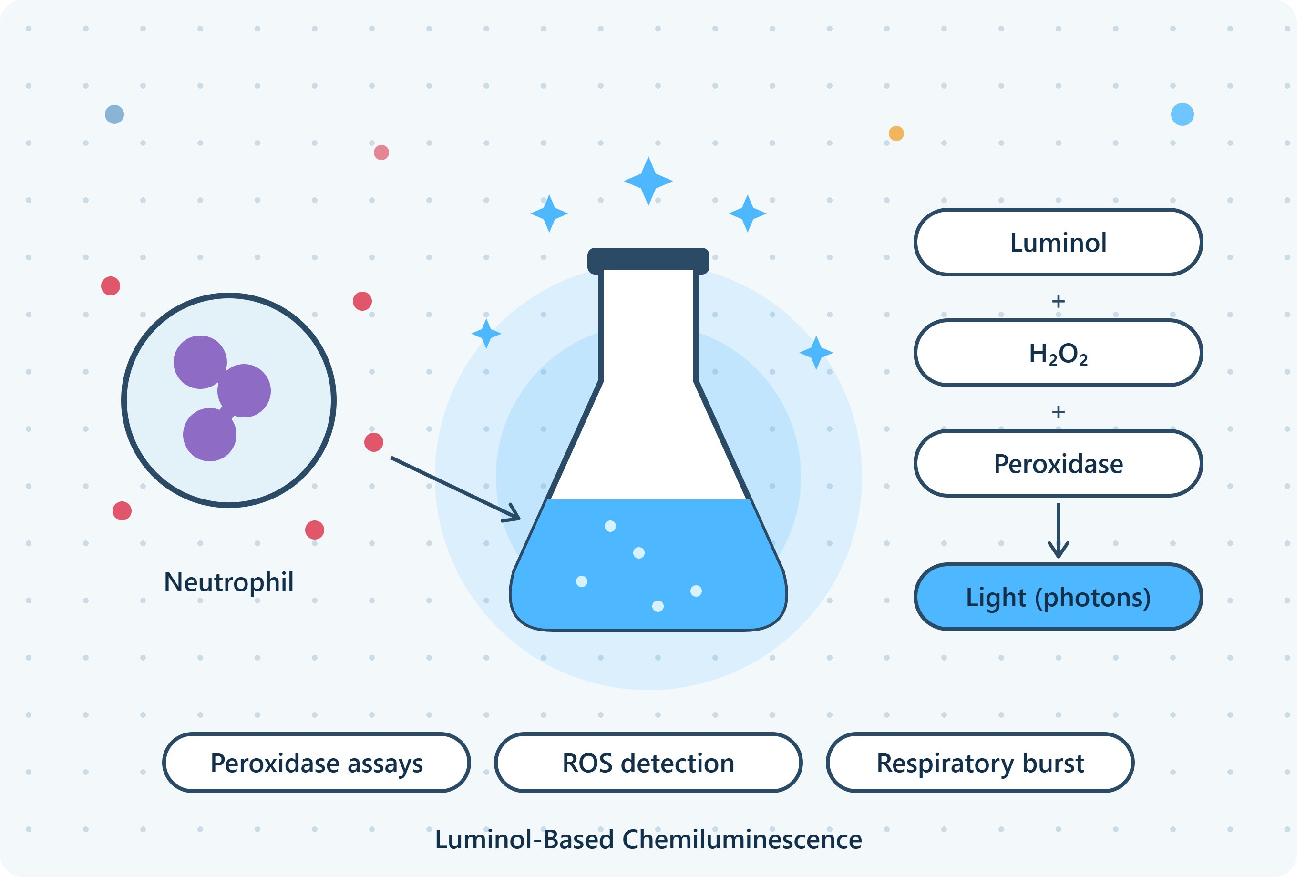
Luminol is one of the most widely recognized chemiluminescent substrates used in biochemical research. During oxidation, luminol can produce light through the formation of an electronically excited reaction product that subsequently releases energy in the form of photons.
Luminol-based systems are particularly useful in studies involving hydrogen peroxide and peroxidase activity. They are also employed in investigations of respiratory burst activity in immune cells, including neutrophils, where ROS production plays an important role in cellular defense mechanisms.
Lucigenin-Based Chemiluminescence
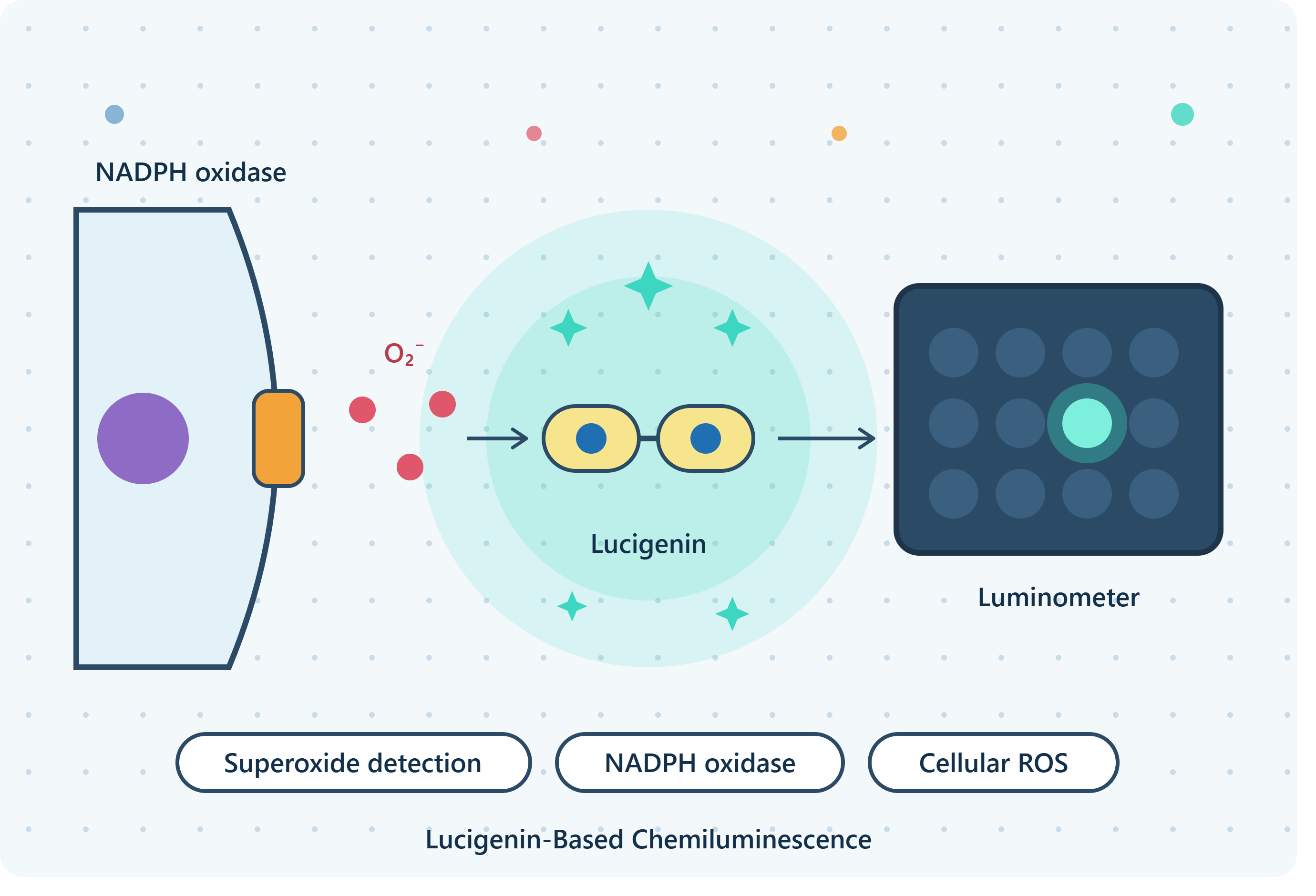
Lucigenin is another chemiluminescent compound used in oxidative stress investigations, particularly in experimental systems examining superoxide-related activity. Its chemiluminescent reaction produces measurable signals that can help researchers study ROS-generating pathways in biological preparations.
However, lucigenin can undergo redox cycling under certain experimental conditions, potentially influencing superoxide production and signal interpretation. Appropriate controls and careful assay validation are therefore important.
Peroxidase-Dependent Chemiluminescent Systems
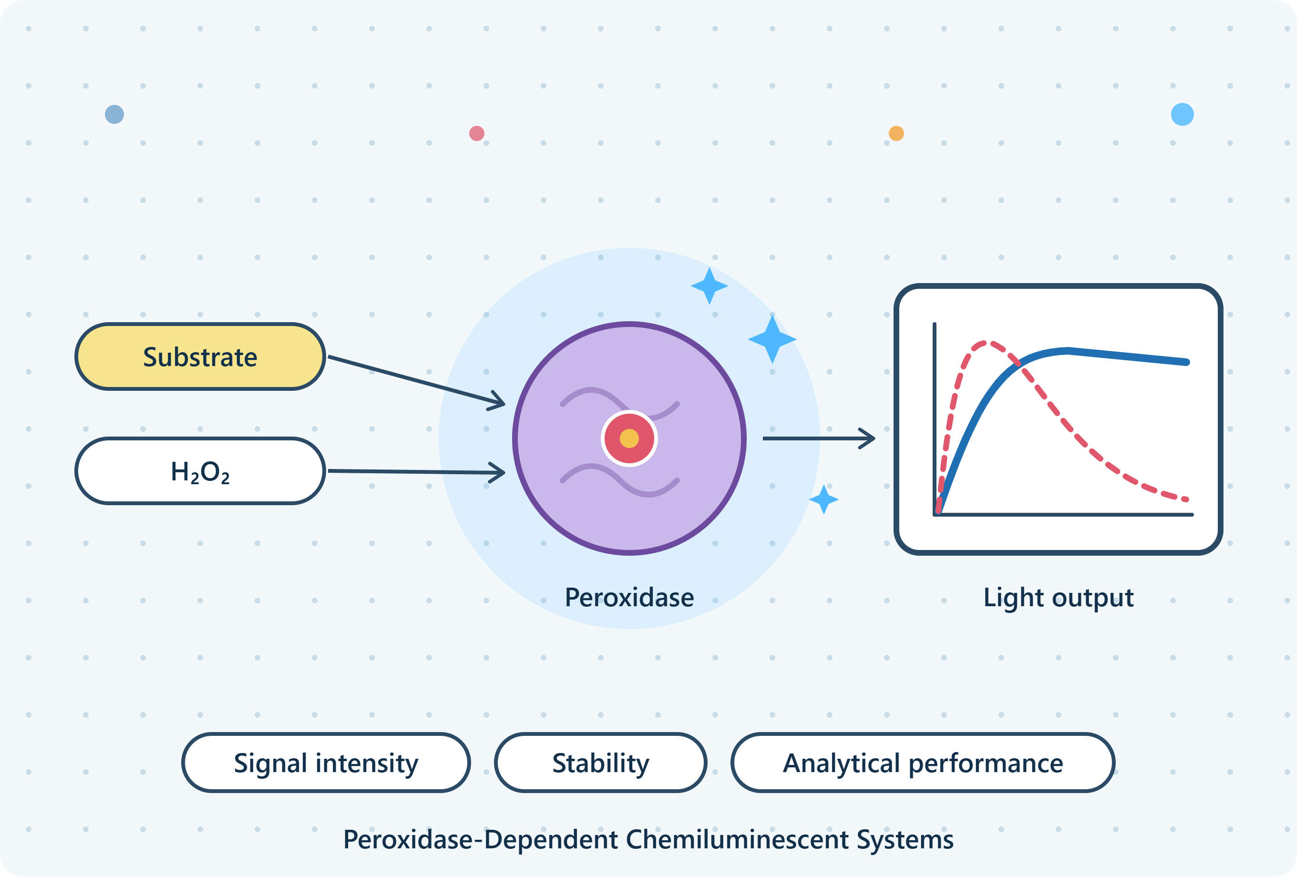
Peroxidase-based detection systems combine an enzyme, a suitable chemiluminescent substrate, and hydrogen peroxide to generate measurable light. These systems are widely used in biochemical analysis and can support investigations of peroxide-dependent oxidative reactions.
The choice of substrate and reaction conditions influences signal intensity, stability, and analytical performance.
Applications of Chemiluminescent Reactive Oxygen Assays
Chemiluminescent ROS detection is relevant to numerous areas of life science research. Its ability to monitor light-producing oxidative reactions makes it useful for investigating different biological pathways and experimental models.
Oxidative Stress Research
Oxidative stress occurs when ROS production exceeds the capacity of antioxidant defense mechanisms. Chemiluminescent assays help researchers investigate oxidative activity and evaluate changes associated with experimental treatments, environmental stressors, and biochemical conditions.
Mitochondrial Function and Cellular Metabolism
Mitochondria are important sources of reactive oxygen species during cellular respiration. Studying mitochondrial ROS production can provide insights into energy metabolism, mitochondrial dysfunction, and cellular responses to metabolic stress.
Immunology and Respiratory Burst Studies
Activated immune cells, particularly neutrophils and macrophages, generate ROS as part of their defense mechanisms. Chemiluminescence-based assays can be used to monitor respiratory burst activity and investigate oxidative responses during immune cell activation.
Pharmacological and Drug Discovery Research
Evaluating the effects of experimental compounds on ROS production is an important component of pharmacological research. Chemiluminescent assays can help researchers investigate whether candidate compounds influence oxidative activity, antioxidant responses, or redox-associated cellular pathways.
Neuroscience Research
Oxidative stress is investigated in numerous neurological research models because of its relationship with neuronal metabolism, mitochondrial function, and cellular signaling. ROS detection methods can support studies examining oxidative mechanisms in neuronal cells and experimental models of neurodegeneration.
Toxicology and Environmental Research
Exposure to certain chemicals, pollutants, and environmental stressors can influence ROS generation. Chemiluminescent detection methods provide researchers with an approach for investigating oxidative responses under different experimental exposure conditions.
Advantages of Chemiluminescence-Based ROS Detection
Chemiluminescent assays offer several analytical characteristics that make them valuable for oxidative stress investigations.
-
High analytical sensitivity: Light-based detection can identify relatively low levels of chemiluminescent activity, depending on the assay system and instrumentation.
-
No external excitation source: Chemiluminescence does not require an excitation light source, which can help reduce background signals associated with sample autofluorescence.
-
Quantitative signal monitoring: Luminescence intensity can be recorded and analyzed to investigate oxidative activity and changes over time.
-
Instrument compatibility: Many assays can be performed using luminometers and microplate readers equipped with suitable detection capabilities.
-
Broad research applications: Chemiluminescent methods can be adapted to various biochemical, cellular, immunological, and pharmacological investigations.
-
Kinetic measurements: Certain assay formats allow researchers to follow changes in luminescence throughout a reaction, providing additional information about reaction dynamics.
Chemiluminescence vs. Fluorescence in ROS Detection
Chemiluminescence and fluorescence are two important light-based analytical techniques used in biological research. Although both involve the measurement of emitted light, their underlying detection mechanisms are different.
In fluorescence-based assays, a fluorescent probe absorbs energy from an external excitation source and subsequently emits light at a different wavelength. In chemiluminescence, light is generated directly through a chemical reaction without the need for external excitation.
Chemiluminescence can therefore offer advantages in applications where minimizing excitation-related background signals is important. Fluorescence, on the other hand, provides additional possibilities for intracellular imaging, localization studies, and multiplexed measurements using different fluorescent probes.
The most appropriate method depends on the target ROS, biological sample, analytical requirements, available instrumentation, and experimental design.
Important Considerations When Selecting a Chemiluminescent ROS Assay
Choosing the right assay is essential for obtaining meaningful and reproducible experimental results. Researchers should consider several factors before selecting a chemiluminescent detection system.
-
Target analyte: Identify the reactive oxygen species or oxidative reaction being investigated.
-
Sample compatibility: Verify that the assay is suitable for the intended biological material, such as cultured cells, tissue extracts, or biochemical preparations.
-
Detection equipment: Confirm that the available luminometer or microplate reader supports the required luminescence measurement.
-
Reagent specificity: Consider the reaction mechanism and potential interference from other sample components.
-
Experimental conditions: Evaluate incubation time, reagent concentrations, temperature, pH, and sample preparation requirements.
-
Controls and validation: Include appropriate positive and negative controls to distinguish specific assay responses from background activity.
-
Signal stability: Consider reaction kinetics and signal duration when planning measurements and comparing experimental conditions.
Careful experimental optimization is particularly important because chemiluminescent signals may be influenced by sample composition, reagent stability, reaction conditions, and potential interference from other oxidative pathways.
Supporting Reliable Oxidative Stress Investigations
Chemiluminescent reactive oxygen assays represent valuable analytical solutions for researchers investigating oxidative reactions, cellular redox regulation, and ROS-associated biological mechanisms. From mitochondrial research and immune cell activation to pharmacological screening and neuroscience, these methods contribute to a better understanding of oxidative processes across different experimental models.
Explore our range of Reactive Oxygen Assays – Chemiluminescent Assays to identify suitable research reagents and analytical solutions for your experimental needs. Whether investigating superoxide-related activity, peroxide-dependent reactions, or broader oxidative stress mechanisms, selecting an appropriate chemiluminescent detection system can support sensitive measurements and more comprehensive scientific investigations.