

How Human Platelet Lysate (HPL) Enhances Stem Cell Growth and Therapy
How Human Platelet Lysate (HPL) Enhances Stem Cell Growth and Therapy
Introduction
Stem cells have long been celebrated for their remarkable ability to self-renew and differentiate into a wide range of specialized cell types, offering immense potential for regenerative medicine, tissue engineering, and therapeutic applications. However, realizing this potential requires a culture environment that supports their growth without compromising safety or functionality. Traditional culture methods often rely on Fetal Bovine Serum (FBS), which raises concerns about ethical sourcing, immunogenicity, and clinical compatibility. Enter Human Platelet Lysate (HPL) a human-derived, growth factor-rich supplement that is transforming stem cell research and therapy by providing a safer, more physiologically relevant environment for expansion and clinical translation.
What is Human Platelet Lysate?
Human Platelet Lysate is produced by lysing human platelets, releasing a natural reservoir of growth factors, cytokines, and bioactive molecules that are essential for cellular proliferation and differentiation. Key growth factors present in HPL include Platelet-Derived Growth Factor (PDGF), Transforming Growth Factor-beta (TGF-β), Epidermal Growth Factor (EGF), and Vascular Endothelial Growth Factor (VEGF). These molecules mimic the regenerative signals found in the human body, creating a microenvironment that is highly conducive to stem cell growth. Unlike animal-derived serum, HPL is fully human in origin, minimizing the risk of immune responses and making it ideal for clinical-grade stem cell applications.

Accelerating Stem Cell Proliferation
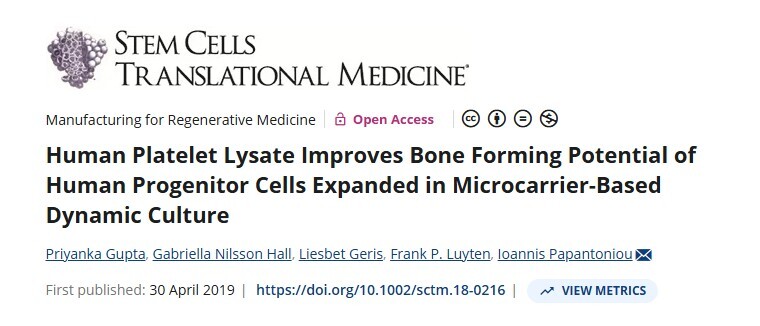
One of the most significant benefits of HPL is its ability to enhance stem cell proliferation. Studies have shown that mesenchymal stem cells (MSCs) cultured with HPL grow faster and achieve higher cell yields compared to those cultured in FBS. This is particularly important for regenerative therapies, where a large number of high-quality cells are required in a short timeframe. The combination of growth factors in HPL stimulates key signaling pathways that regulate cell cycle progression, helping stem cells multiply efficiently without losing their stemness or differentiation potential.
Maintaining Stem Cell Potency and Functionality
Growth is only part of the story maintaining the potency and functionality of stem cells is equally critical. HPL not only supports rapid expansion but also preserves the ability of MSCs and other stem cells to differentiate into specific tissue types such as bone, cartilage, and fat. This makes HPL indispensable for therapeutic applications, where both quantity and quality of cells directly affect treatment outcomes. Its human-derived nature also reduces the risk of xenogeneic contamination, ensuring that cultured stem cells remain clinically safe for transplantation or in vivo therapy.
Clinical Applications Enabled by HPL
HPL has become a game-changer in the clinical translation of stem cell therapies. By enabling xeno-free, GMP-compliant expansion of therapeutic cells, HPL facilitates applications in tissue repair, immune modulation, and regenerative medicine. For example, HPL-expanded MSCs are being tested in treatments for bone defects, cartilage injuries, cardiovascular repair, and autoimmune disorders. Its consistent performance and regulatory-friendly profile make HPL a reliable tool for both laboratory research and large-scale clinical production.
Supporting Regenerative Microenvironments
Beyond cell expansion, HPL contributes to creating regenerative microenvironments. Its growth factors promote cell migration, angiogenesis, and extracellular matrix formation processes essential for effective tissue regeneration. In combination with biomaterials and scaffolds, HPL can enhance the integration and functionality of engineered tissues, accelerating healing and improving patient outcomes. By bridging laboratory culture techniques with therapeutic applications, HPL enables a more natural, human-relevant approach to stem cell therapy.
Future Perspectives
The future of stem cell therapy is closely intertwined with innovations in culture supplements like HPL. Researchers are exploring standardized, chemically defined HPL formulations, scalable production methods, and automated culture systems to ensure consistent quality and safety. As regenerative medicine continues to evolve, HPL is poised to remain at the forefront, providing an essential tool for expanding stem cells efficiently, safely, and clinically effectively. Its integration into therapeutic pipelines promises to accelerate the delivery of next-generation regenerative treatments worldwide.

Conclusion
Human Platelet Lysate has revolutionized stem cell culture by providing a human-derived, growth factor-rich environment that enhances proliferation, preserves potency, and supports clinical translation. From accelerated cell expansion to improved functionality in therapeutic applications, HPL is a cornerstone in the development of safe, effective, and scalable stem cell therapies. By bridging the gap between laboratory research and patient-centered treatments, HPL is helping to unlock the full potential of regenerative medicine.
Recent Posts
-
Advances in Peptide Synthesis Technologies and Their Applications in Modern Biotechnology
Advances in Peptide Synthesis Technologies and Their Applications in Modern Biotechnology …27th Mar 2026 -
Western Blot
Introduction Western blotting is a fundamental analytical technique widely used in molecular biology …27th Mar 2026 -
Ethidium Bromide as a Cooperative Effector of DNA Structure
Introduction DNA structure is not static. Under specific physicochemical conditions, DNA molecules c …25th Mar 2026