
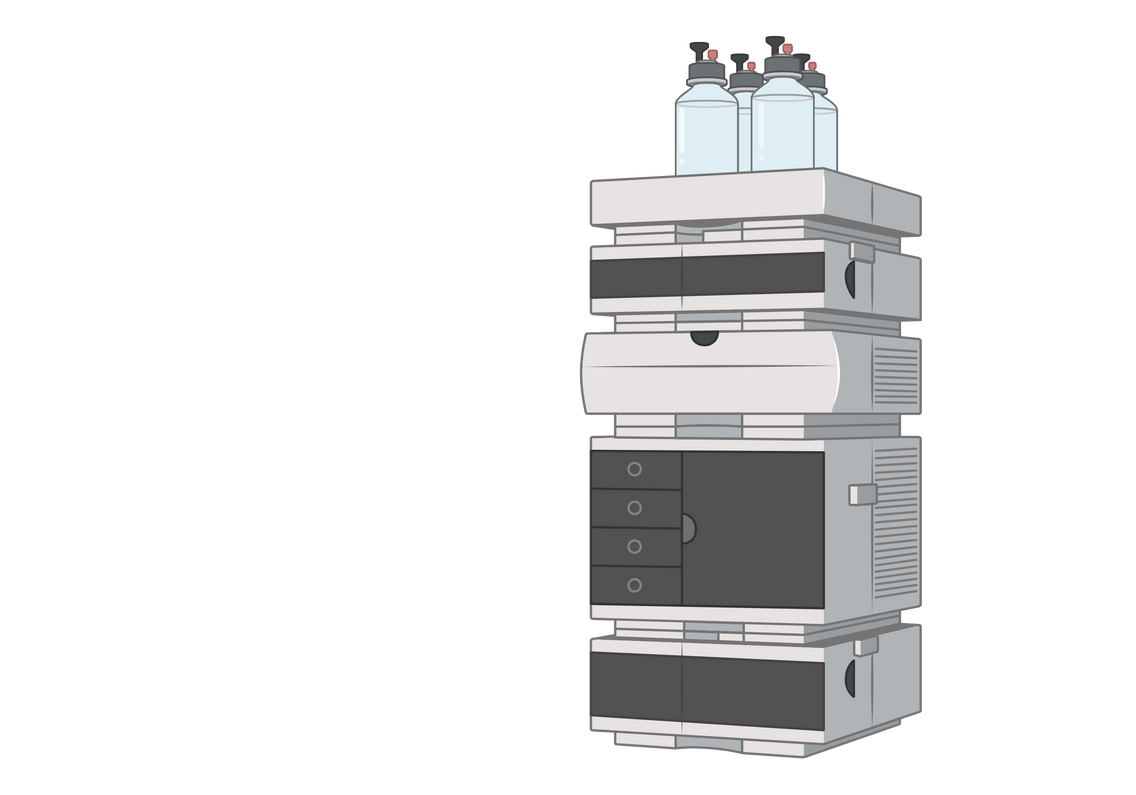
HPLC Chromatography: Principle, Types, and Applications
HPLC Chromatography: Principle, Types, and Applications
Introduction to HPLC Chromatography
HPLC Chromatography (High-Performance Liquid Chromatography) is one of the most powerful analytical techniques used in modern laboratories. It allows scientists to separate, identify, and quantify components in complex mixtures with high precision and sensitivity.
Widely applied in pharmaceuticals, biotechnology, environmental testing, and food analysis, HPLC Chromatography has become essential for both research and quality control.
What is HPLC Chromatography?
HPLC Chromatography is a technique based on the separation of compounds as they pass through a column packed with a stationary phase, under high pressure, while being carried by a liquid mobile phase.
Each compound interacts differently with the stationary phase, resulting in different retention times and enabling separation.
Principle of HPLC Chromatography
The principle of HPLC Chromatography relies on:
- Partitioning between mobile and stationary phases
- Adsorption of analytes onto the stationary phase
- Polarity differences between compounds
As the sample moves through the column:
- Compounds with stronger interactions with the stationary phase move slower
- Compounds with weaker interactions elute faster
This results in a chromatogram, where each peak represents a different compound.
Main Components of an HPLC System
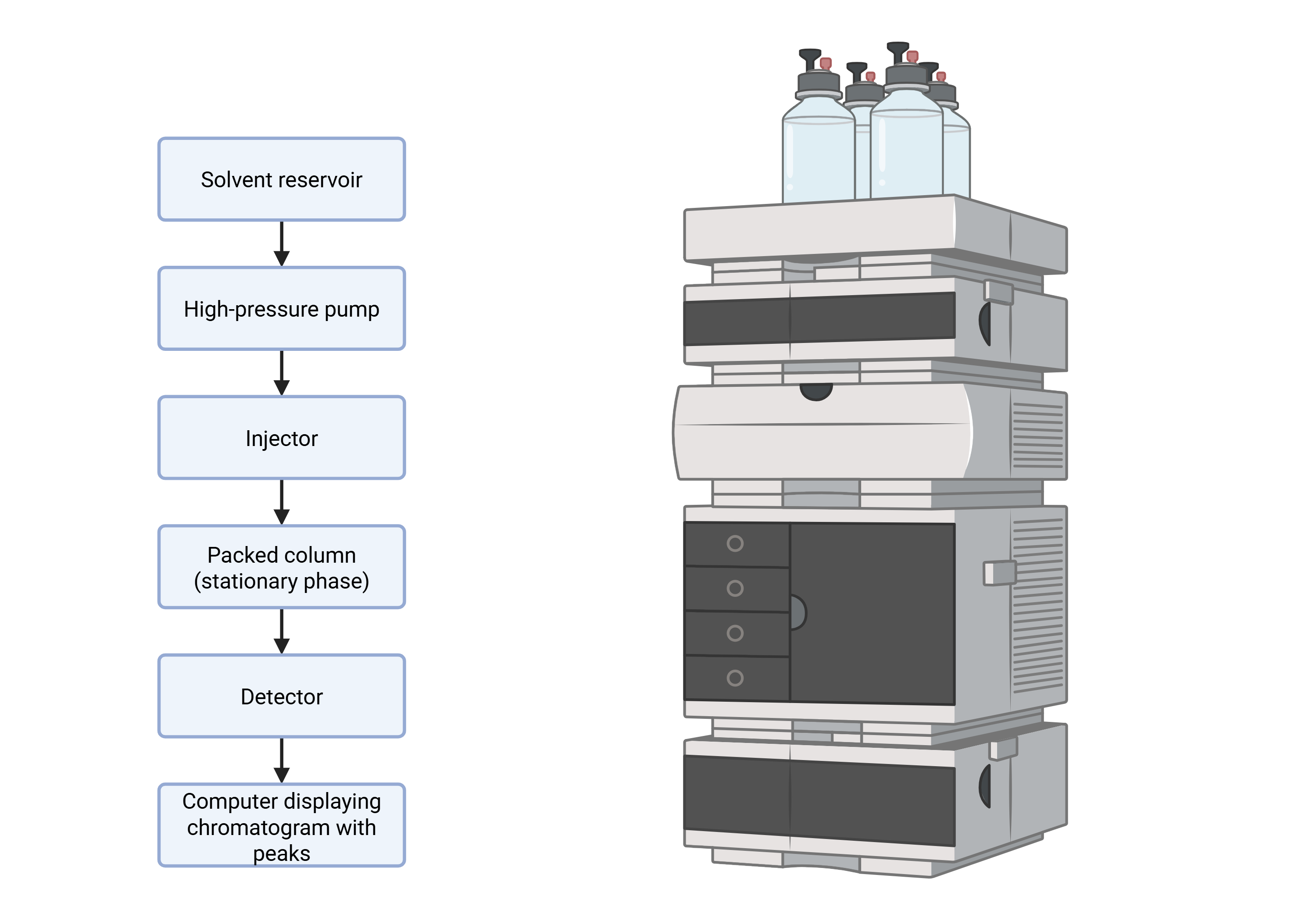
An HPLC Chromatography system typically consists of:
- Solvent Reservoir – Contains the mobile phase
- Pump – Generates high pressure to move the solvent
- Injector – Introduces the sample into the system
- Column – Packed with stationary phase (core of separation)
- Detector – Identifies compounds (UV, fluorescence, etc.)
- Data System – Records and analyzes results
Types of HPLC Chromatography
1. Reverse-Phase HPLC (RP-HPLC)
- Most commonly used type
- Non-polar stationary phase and polar mobile phase
- Ideal for organic compounds
2. Normal-Phase HPLC
- Polar stationary phase and non-polar mobile phase
- Used for separating polar compounds
3. Ion-Exchange HPLC
- Separates ions and charged molecules
- Common in protein and amino acid analysis
4. Size-Exclusion HPLC
- Separates molecules based on size
- Used for proteins and polymers
Applications of HPLC Chromatography
HPLC Chromatography is used in various fields:
Pharmaceutical Industry
- Drug purity testing
- Stability studies
- Quality control
Biotechnology
- Protein and peptide analysis
- Nucleic acid purification
Environmental Analysis
- Detection of pollutants in water and soil
Food Industry
- Additive and contaminant analysis
- Vitamin and preservative detection
Advantages of HPLC Chromatography
- High sensitivity and accuracy
- Fast analysis time
- Reproducible results
- Suitable for complex mixtures
- Automated operation
Limitations of HPLC Chromatography
- High cost of equipment
- Requires skilled operation
- Solvent consumption can be high
- Maintenance of columns and system
Conclusion
HPLC Chromatography is a cornerstone technique in analytical science, offering precise separation and quantification of compounds across multiple industries. Its versatility, reliability, and efficiency make it indispensable in modern laboratories.
Whether you're working in pharmaceuticals, environmental science, or biotechnology, mastering HPLC Chromatography is essential for accurate and reproducible analysis
Recent Posts
-
HPLC Chromatography: Principle, Types, and Applications
HPLC Chromatography: Principle, Types, and Applications Introduction to HPLC Chromatography HPLC Chr …8th Apr 2026 -
Advances in Peptide Synthesis Technologies and Their Applications in Modern Biotechnology
Advances in Peptide Synthesis Technologies and Their Applications in Modern Biotechnology …27th Mar 2026 -
Western Blot
Introduction Western blotting is a fundamental analytical technique widely used in molecular biology …27th Mar 2026