
Western Blot
Introduction
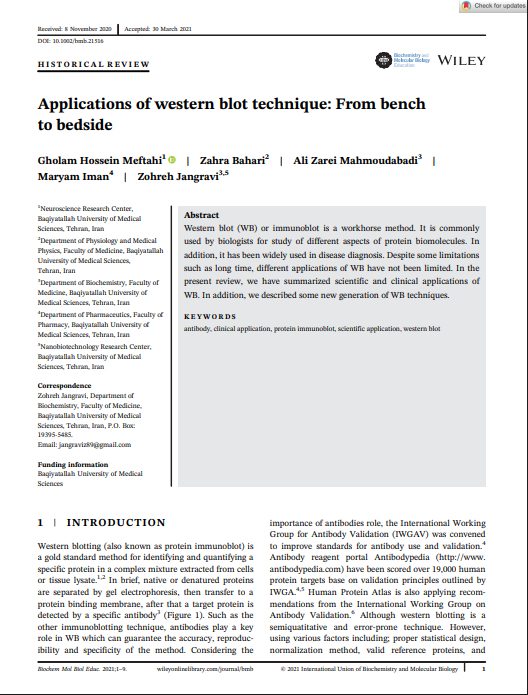
Western blotting is a fundamental analytical technique widely used in molecular biology and biochemistry for the detection, identification, and semi-quantification
of specific proteins within complex biological samples. It combines protein separation, membrane transfer, and antibody-based detection, making it a highly specific and reliable method.
This technique is essential in research, clinical diagnostics, and biotechnology, particularly for studying protein expression, post-translational modifications, and disease biomarkers.

Principle of Western Blotting
Western blot is based on three key steps:
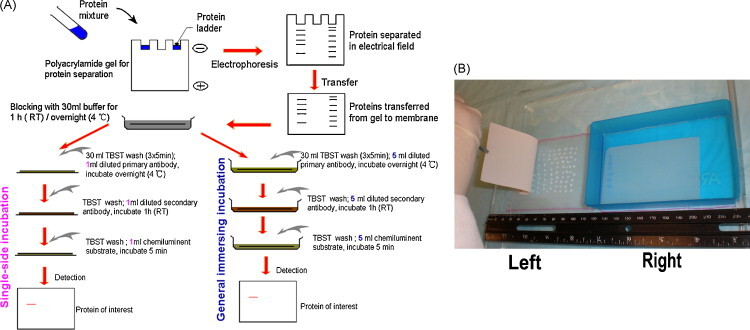
- Separation of proteins according to molecular weight using gel electrophoresis
- Transfer of proteins onto a membrane
- Detection using specific antibodies
The specificity of the method relies on antigen–antibody interactions, allowing precise identification of target proteins even in complex mixtures.
Step-by-Step Methodology
1. Protein Extraction and Sample Preparation
Proteins are extracted from cells or tissues using lysis buffers containing:
- Detergents (to solubilize membranes)
- Protease inhibitors (to prevent degradation)
Samples are then mixed with loading buffer (SDS + reducing agents) and heated to denature proteins.
2. SDS-PAGE (Protein Separation)
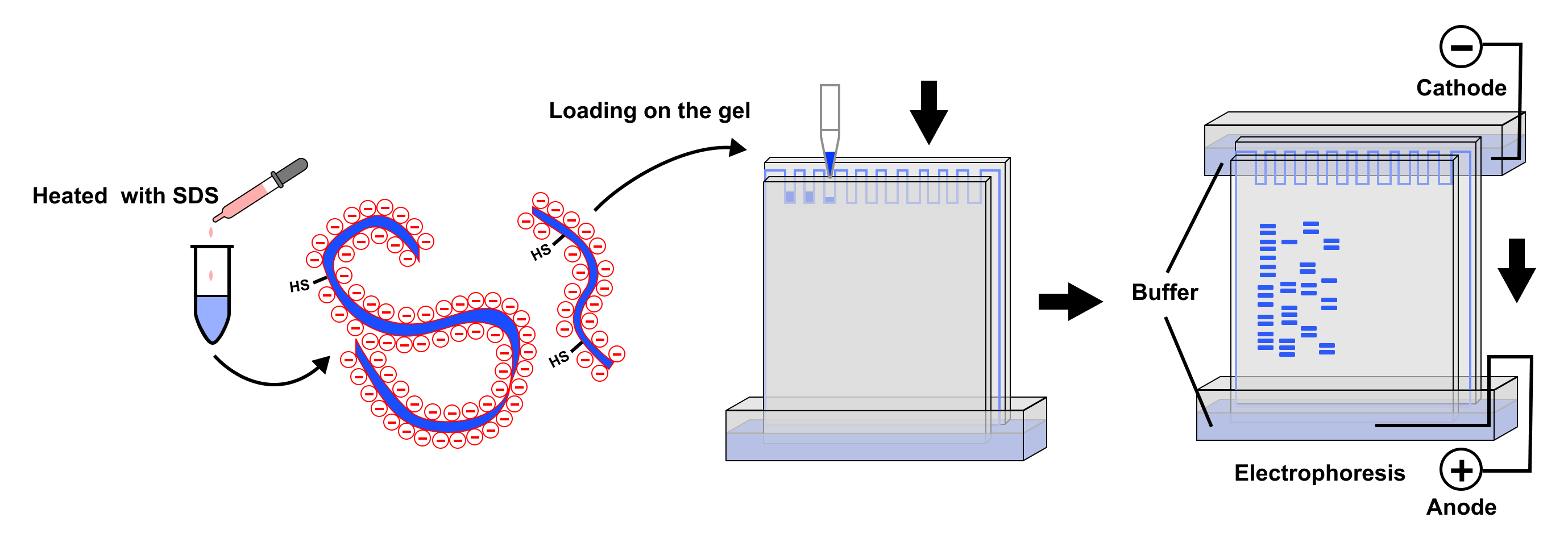
Proteins are separated by SDS-PAGE (sodium dodecyl sulfate–polyacrylamide gel electrophoresis):
- SDS gives proteins a uniform negative charge
- Separation occurs based on molecular weight
- Smaller proteins migrate faster through the gel
This step generates a protein band pattern.
3. Transfer to Membrane
Separated proteins are transferred onto a solid membrane:
Transfer methods include:
- Wet transfer
- Semi-dry transfer
This step ensures proteins are accessible for antibody detection.
4. Blocking Step
The membrane is incubated with a blocking solution ( BSA) to:
- Prevent non-specific antibody binding
- Reduce background noise
5. Antibody Incubation
Primary Antibody
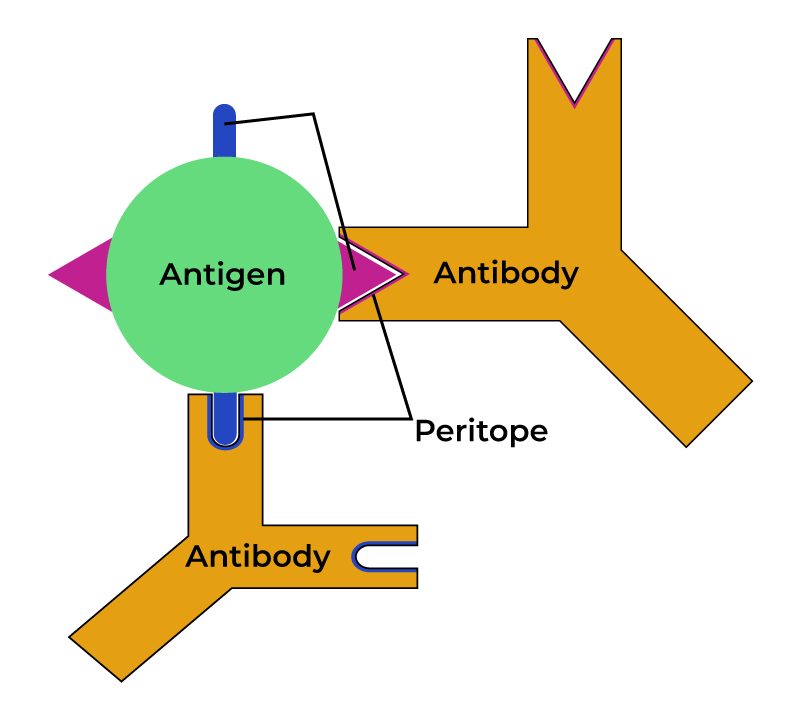
- Specifically binds to the target protein
Secondary Antibody
- Binds to the primary antibody
- Conjugated to an enzyme (e.g., HRP) for detection
6. Detection and Visualization
Detection is commonly performed using:
- Chemiluminescence (most sensitive method)
- Colorimetric or fluorescent detection
The signal appears as bands on the membrane, corresponding to the target protein.
Factors Affecting Western Blot Quality
- Protein integrity and concentration
- Antibody specificity and dilution
- Efficient transfer conditions
- Proper blocking and washing steps
Optimizing these parameters ensures high sensitivity and reproducibility.
Applications of Western Blotting
Western blot is widely used in:
1. Protein Expression Analysis
- Detect presence or absence of proteins
- Compare expression levels between samples
2. Disease Diagnosis
- Detection of viral proteins (e.g., HIV confirmation tests)
- Identification of disease biomarkers
3. Post-Translational Modifications
- Phosphorylation
- Glycosylation
- Cleavage products
4. Validation of Recombinant Proteins
- Confirm protein size and identity
- Assess purity
Advantages of Western Blot
- High specificity (antibody-based detection)
- Ability to detect low-abundance proteins
- Reliable confirmation technique
- Widely standardized method
Limitations
- Time-consuming multi-step process
- Semi-quantitative (not fully quantitative)
- Requires high-quality antibodies
- Potential for non-specific bands
Conclusion
Western blot remains a gold-standard technique for protein analysis, combining specificity, sensitivity, and versatility. Despite the emergence of advanced proteomic technologies, it continues to play a crucial role in biomedical research, diagnostics, and biotechnology.
Its reliability in confirming protein identity and studying expression patterns makes it an essential tool in modern life sciences.
Recent Posts
-
Advances in Peptide Synthesis Technologies and Their Applications in Modern Biotechnology
Advances in Peptide Synthesis Technologies and Their Applications in Modern Biotechnology …27th Mar 2026 -
Western Blot
Introduction Western blotting is a fundamental analytical technique widely used in molecular biology …27th Mar 2026 -
Ethidium Bromide as a Cooperative Effector of DNA Structure
Introduction DNA structure is not static. Under specific physicochemical conditions, DNA molecules c …25th Mar 2026