

Western Blot in Single-Cell Proteomics: Unlocking Protein Insights One Cell at a Time
Western Blot in Single-Cell Proteomics: Unlocking Protein Insights One Cell at a Time
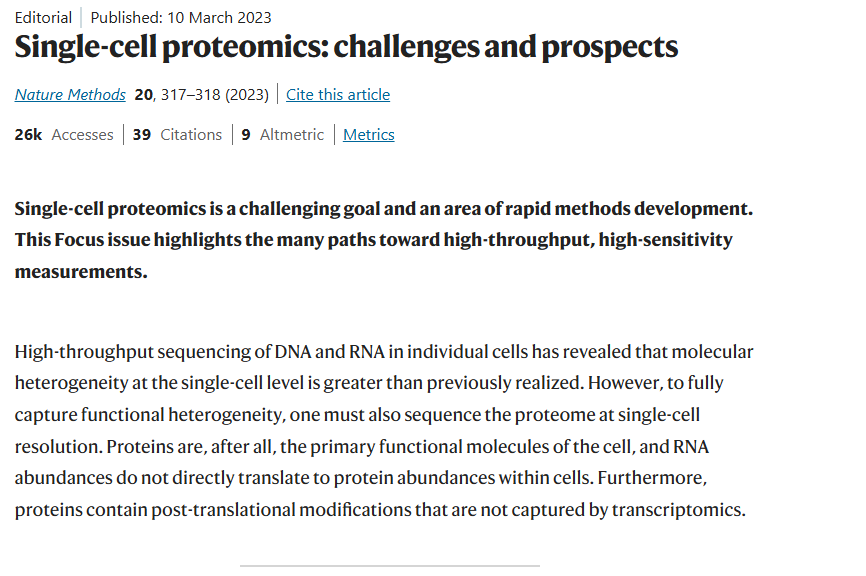
Proteomics has traditionally focused on populations of cells, averaging signals across millions of cells and often masking subtle but critical variations. In recent years, the field of single-cell proteomics has emerged, providing unprecedented insight into cellular heterogeneity, rare cell populations, and dynamic protein networks. Among the tools enabling this revolution, Western blotting has evolved to meet the challenges of single-cell analysis, bridging the gap between classic protein detection methods and cutting-edge, high-resolution proteomics.
The Challenge of Single-Cell Proteomics
Studying proteins at the single-cell level presents unique challenges. Traditional Western blotting requires micrograms of protein, far more than the amount available from a single cell. Proteins in individual cells are scarce and diverse, making detection difficult without amplification or highly sensitive techniques. Additionally, variability between cells demands reproducible and quantitative approaches, complicating the use of standard gel-based methods. These obstacles have spurred innovative adaptations of Western blot technology to enable single-cell protein analysis.
Innovations in Western Blot for Single-Cell Analysis
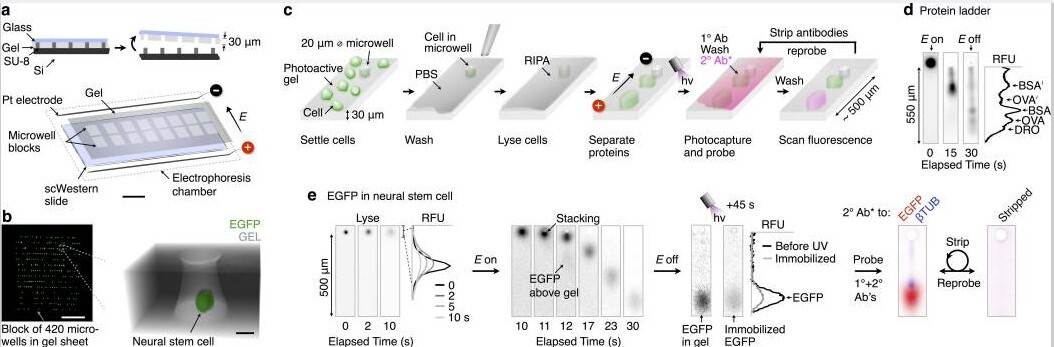
Modern approaches to Western blotting in single-cell proteomics combine miniaturization, automation, and enhanced detection methods. Capillary-based Western blot systems, sometimes referred to as “digital” or “simple” Western blotting, allow for the analysis of proteins from tiny sample volumes, even down to the content of a single cell. By replacing traditional gels with microfluidic channels, these systems dramatically reduce sample loss and enhance sensitivity, while providing high-resolution separation of protein isoforms.
Fluorescent and chemiluminescent detection methods have also been optimized for single-cell applications. Fluorescent dyes with high quantum yields, coupled with advanced imaging systems, allow for the detection of multiple proteins simultaneously. This multiplexing capability is particularly valuable for single-cell studies, where measuring several protein targets in the same cell can reveal intricate signaling networks and cell-state-specific pathways.
Single-cell western blotting
Applications and Insights
The integration of Western blotting into single-cell proteomics has opened new avenues for understanding cellular diversity. Researchers can now investigate rare cell populations, such as circulating tumor cells or stem cells, which would otherwise be lost in bulk analyses. Single-cell Western blotting enables the quantification of signaling proteins, transcription factors, and post-translational modifications, providing a deeper understanding of how individual cells respond to stimuli, differentiate, or develop disease.
In cancer research, for example, single-cell Western blotting has been used to identify heterogeneous responses to targeted therapies, uncovering subpopulations of cells resistant to treatment. In neuroscience, it enables the study of protein expression changes in rare neuronal subtypes, offering insight into neurodegenerative disease progression. These applications highlight how combining Western blotting with single-cell resolution transforms our ability to interpret complex biological systems.

Advantages Over Other Single-Cell Protein Methods
While mass spectrometry-based single-cell proteomics provides broad profiling, Western blotting retains several advantages. It allows for high specificity, targeting known proteins with validated antibodies, and offers quantitative precision for comparing expression levels between individual cells. Additionally, the workflow is relatively straightforward, and results are interpretable without requiring extensive computational analysis, making it accessible to many research laboratories.
Future Perspectives
The future of Western blotting in single-cell proteomics is intertwined with continued technological innovation. Microfluidics, enhanced imaging, and AI-assisted band detection are expected to improve throughput, sensitivity, and quantification. Integration with multi-omics approaches, combining transcriptomics, genomics, and proteomics at the single-cell level, will provide a comprehensive understanding of cellular behavior and function. As these technologies mature, Western blotting will continue to be an indispensable tool for dissecting cellular heterogeneity in health and disease.
Conclusion
Single-cell proteomics represents a paradigm shift in our understanding of biology, and Western blotting has adapted to meet the demands of this emerging field. By enabling sensitive, quantitative, and multiplexed analysis of proteins from individual cells, Western blotting provides critical insight into cellular heterogeneity, rare cell populations, and dynamic protein networks. As technology continues to advance, its role in single-cell research will only grow, empowering scientists to explore the complexity of life at an unprecedented resolution.
Recent Posts
-
Post-Translational Modification Profiling: Advancing Protein Insights with Modern Western Blotting
Post-Translational Modification Profiling: Advancing Protein Insights with Modern Western Blotting …17th Mar 2026 -

Western Blot in Single-Cell Proteomics: Unlocking Protein Insights One Cell at a Time
Western Blot in Single-Cell Proteomics: Unlocking Protein Insights One Cell at a Time Proteomics has …17th Mar 2026 -

Ethical Considerations in Genome Editing Technologies
Ethical Considerations in Genome Editing Technologies Genome editing technologies, particularly CRIS …17th Mar 2026