
Blog

Top Considerations When Buying Genome Editing Reagents
Top Considerations When Buying Genome Editing Reagents
The success of any genome editing experiment depends as much on the quality of the reagents as it does on the design of the experiment itself. Whether you are working with CRISPR/Cas9, TALENs, or other gene-editing tools, selecting the right reagents can mean the difference between a smooth, reproducible experiment and one riddled with inefficiencies, off-target effects, or failed edits. With a wide array of suppliers, kits, and formats avai
…
17th Mar 2026

Choosing the Right CRISPR/Cas9 Kit for Your Experiment: A Complete Guide
Choosing the Right CRISPR/Cas9 Kit for Your Experiment: A Complete Guide
Introduction
Genome editing has undergone a profound transformation with the emergence of CRISPR/Cas9 technology, enabling researchers to manipulate genetic material with remarkable precision and efficiency. However, the rapid expansion of available CRISPR kits and genome editing tools has introduced a new challenge: selecting the most appropriate system for a specific experimental context. Making the right choice is
…
17th Mar 2026
The Intestinal Microbiota: A Complex Microbial Ecosystem
The Intestinal Microbiota: A Complex Microbial Ecosystem
The intestinal microbiota represents one of the most complex microbial ecosystems on Earth. This community is composed of trillions of microorganisms, primarily bacteria, but also archaea, fungi, and viruses, living in a dynamic and interactive environment. These microorganisms form a highly structured microbial network that plays essential roles in metabolic processes, ecological balance, and molecular interactions within the intestinal e
…
13th Mar 2026
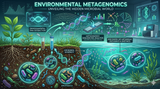
Metagenomics in Environmental Microbiology: Exploring Hidden Microbial Worlds
Metagenomics in Environmental Microbiology: Exploring Hidden Microbial Worlds
Introduction
Microorganisms are the unseen architects of Earth's ecosystems. From the deepest ocean trenches to nutrient-rich soils, microbial communities play a critical role in biogeochemical cycles, environmental stability, and ecosystem productivity. Traditional microbiology techniques, relying on culturing individual species in the laboratory, have long provided insights into bacterial physiology and genetics. How
…
13th Mar 2026

The Environmental Resistome: Hidden Genetic Libraries in Soil and Water Microbiomes
The Environmental Resistome : Hidden Genetic Libraries in Soil and Water Microbiomes
Introduction
Bacteria in soil and aquatic ecosystems are not just passive inhabitants they are dynamic reservoirs of genetic information, including genes that confer resistance to various chemical compounds. This collection of resistance genes is often referred to as the environmental resistome, representing an extensive natural library of adaptive traits that bacteria can exchange, evolve, and use to survive in
…
13th Mar 2026